Electric two-wheeler retail in September came to 2,07,314 units, up 88.67 percent on last year. I think that single number says more about where India's EV story actually stands than any launch event for a ₹25 lakh SUV. Penetration in the two-wheeler market is 11.6 percent, up from 8.2 percent in September 2025 and 10.7 percent in August.
A look at the league table helps. TVS led with 54,037 units, Bajaj followed with 48,429, Ather had 30,533 and Hero MotoCorp 24,321, all from the ETAuto write-up of FADA's data. Ola Electric retailed 13,451, which is 2.96 percent fewer than a year ago. Among the named makers in that list, it is the only one that went backwards. The established two-wheeler makers, in other words, are growing faster than the company that made the most noise at the start.
It is a scooter story
Scooters hit a record 9,95,576 dispatches in September, according to Autocar India, with 1,86,692 of them electric. JATO's registration data says electric scooters were 10.6 percent of all two-wheelers registered, and electric motorcycles a mere 0.2 percent. For comparison, the Hero Splendor Plus alone registered 2,48,592 units. Nobody has built an electric equivalent that sells like that.
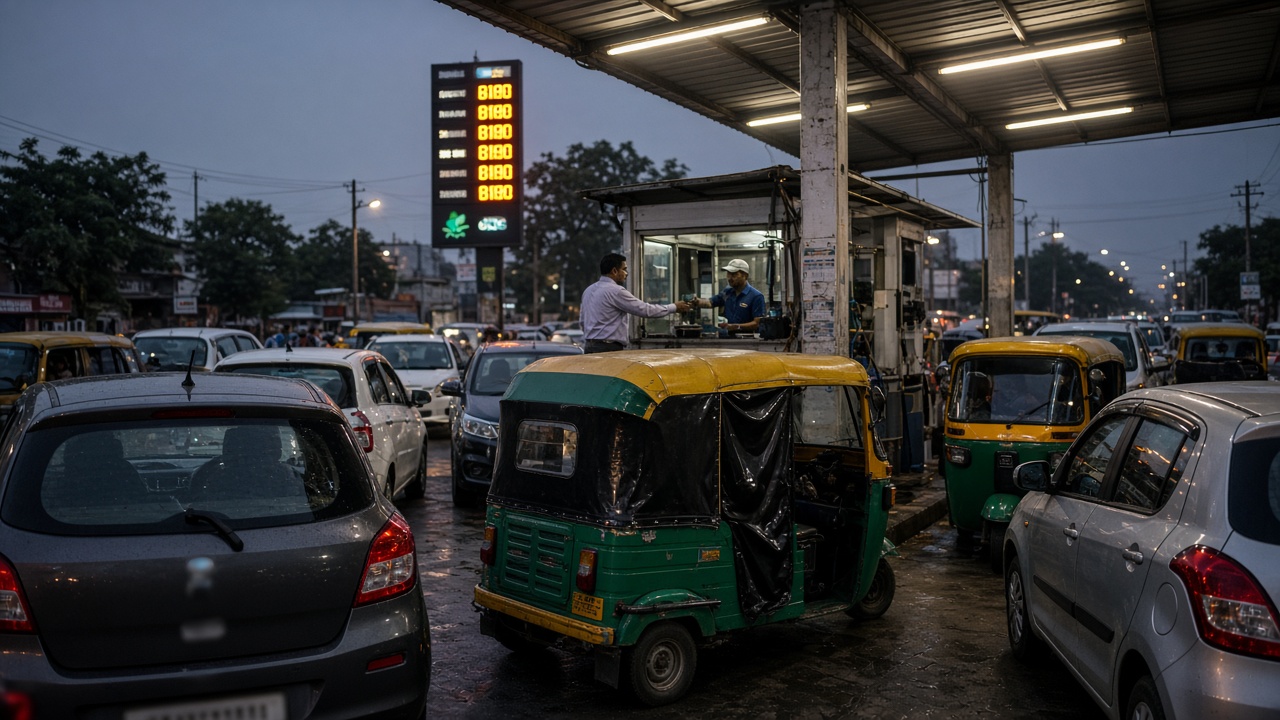
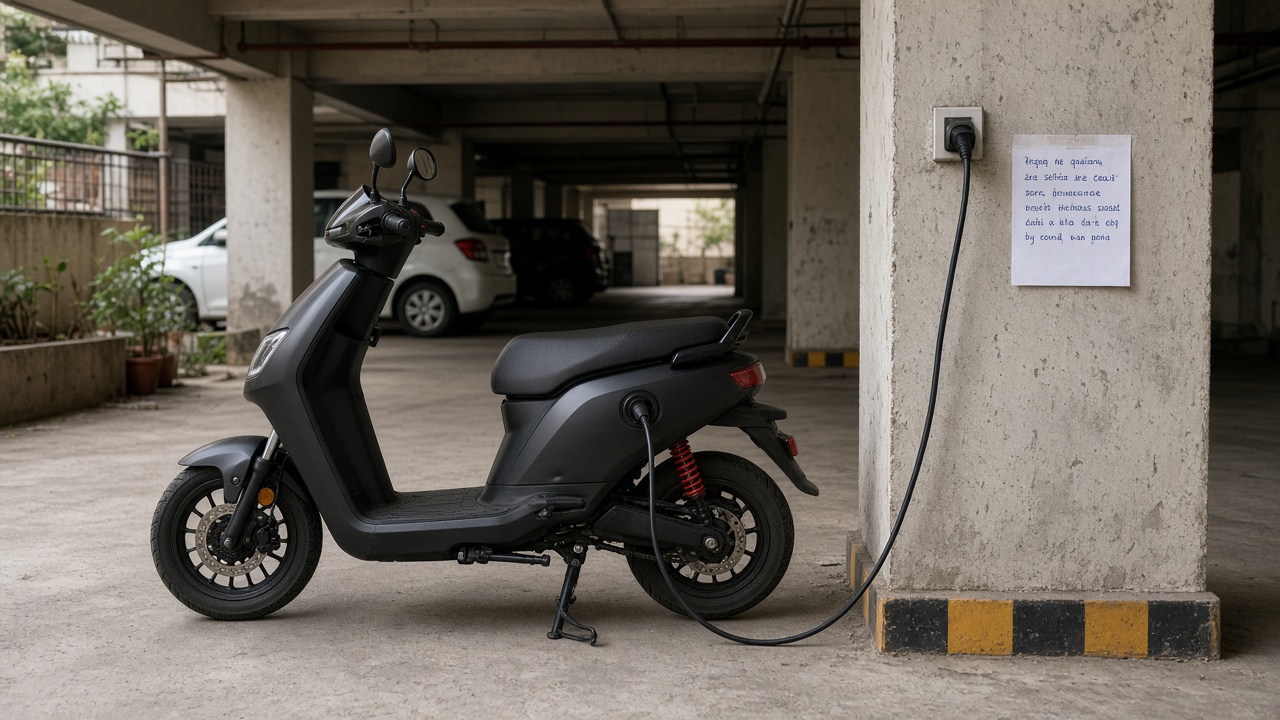
It makes sense once you think about how scooters get used. A scooter does office, market and school run, mostly within a city, and it sleeps at home every night. Charging happens wherever it was going to be parked anyway. Nobody needs a highway fast charger to take a scooter to work. The petrol bill, meanwhile, has become hard to ignore, and I suspect that has done more for the electric scooter than any subsidy poster.
Three-wheelers make the same point more loudly. FADA put electric penetration there at 64.90 percent in September, with 86,024 electric three-wheelers retailed, up 40 percent. Few people buy an e-rickshaw or an L5 passenger three-wheeler to feel good about the planet. I assume they buy it because the running cost works out lower and the vehicle covers the same short routes every day. When the sums are that clear, nobody needs to be persuaded.
Subsidy has had a hand in this too. According to the Ministry of Heavy Industries, PM E-DRIVE has supported 2.65 million electric vehicle sales, of which 2.379 million are two-wheelers, against a target of 2.479 million. Those are from a Lok Sabha reply as reported by electrive in early August, so they are a few months old now. Electric trucks are another story, with just 55 supported against a target of 5,643.
Cars are waiting for batteries
Electric passenger vehicles had a record month too, with 36,108 retailed, up 94.56 percent, and penetration at 8.45 percent. The problem is supply. FADA's Giridhar told Business Standard that imported components, batteries in particular, and shipping constraints are affecting availability, with some manufacturers reporting freight costs up two to three times. He said festive buyers who do not want to wait for an EV could switch to petrol or CNG. Mint, meanwhile, reports that carmakers are running near full capacity and that demand has outstripped supply, with rising fuel prices pushing people towards electric.
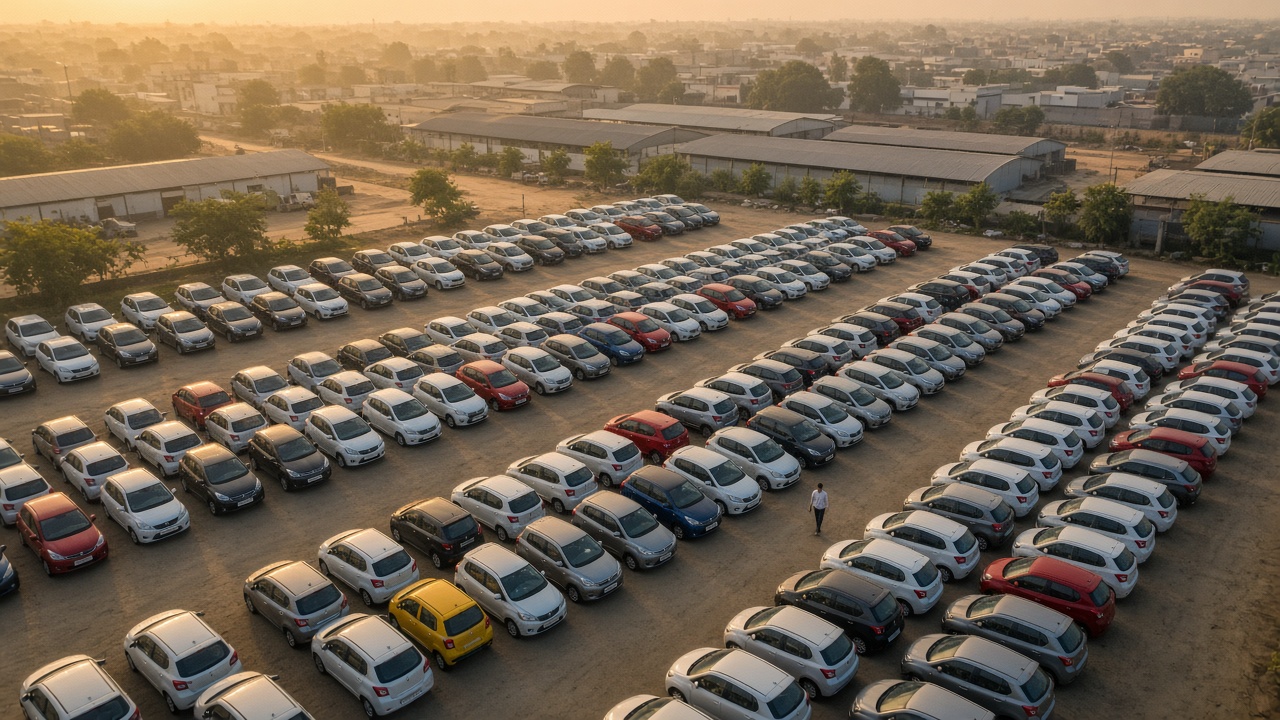
That is an unusual position for the industry, where the usual complaint is too much stock. Here someone has the money and is ready to buy, and the product is on a ship.
The charger count looks better than it feels
Now to the plugs. The Ministry of Heavy Industries counted 67,657 public charging points in August 2026, including 1,139 battery-swapping interfaces. That compares with 29,151 in December 2025 and about 5,000 in early 2022, so the growth is real. Against that, a Rubix Data Sciences study cited by the Times of India, using CII's baseline, says India will need 13.2 lakh public charging points by 2030. We are at roughly 5 percent of that.
Then there is the quality of what is installed. Of 66,518 fixed chargers, 48,709 are rated below 30 kW. Only 534 are in the 121 to 240 kW band, and just nine in the whole country go above 240 kW. The top ten states, led by Karnataka, Maharashtra and Uttar Pradesh, hold 78 percent of the chargers. Inside a big city in one of those states you will probably find a plug. A long trip through a thinner part of the country is a planning exercise.
Charger operators have a separate problem. The same study puts utilisation at only 1 to 5 percent, so a lot of public chargers sit idle. A pump owner in Giridih, Jharkhand told the Times of India that a 60 kW DC charger costs ₹8.5 to 9 lakh for the machine, and a dedicated transformer with grid connection another ₹5.5 to 6 lakh. Two to four vehicles a day cannot repay ₹15 to 16 lakh, he said, which is why private pump dealers in Jharkhand and Bihar avoid it. Buyers wait for chargers, and chargers wait for buyers. Everyone is being quite reasonable and nothing is happening.
Government money is slow as well. Under PM E-DRIVE, 6,562 public chargers have been approved and ₹2,000 crore set aside, but none had been installed as of 22 July, according to a Lok Sabha reply reported by electrive. FAME-II, the earlier scheme, delivered 9,583 public charging stations.
The charger that matters is in the basement
The Times of India piece quotes a Delhi-NCR owner whose society would not allow a home charger in the basement parking over safety concerns. His running cost, he says, is ₹3 to 3.50 a km even on commercial chargers at ₹15 to 21 a unit, against ₹10 to 12 a km in his old petrol sedan, and about ₹1 a km if he could charge at home rates of ₹8 a unit. These are his numbers, not an official study, but they match the logic. The cheapest way to run an EV is the charger you cannot install.
This is why I do not lose sleep over the public charger count for scooters, but I do for cars. I would guess a scooter owner has an easier time plugging in than a car owner in a flat, who needs the residents' association to say yes. That is a harder problem than anything a ministry can fund. Until more housing societies get comfortable with home chargers, the electric car stays a car for people with their own parking.
So the scooter market is flying and the car market is supply-limited and charger-limited at the same time. Both can be true. My bet is that the next big jump in electric cars will come from fixing the basement, not building the highway.