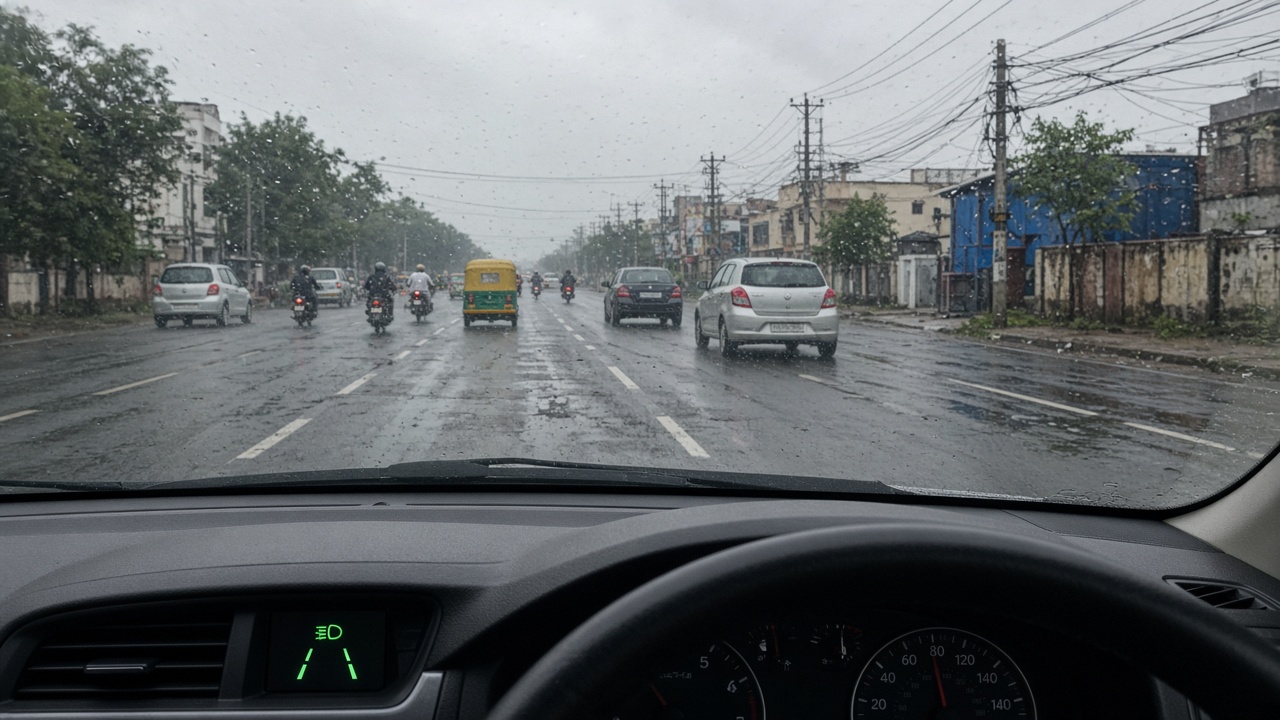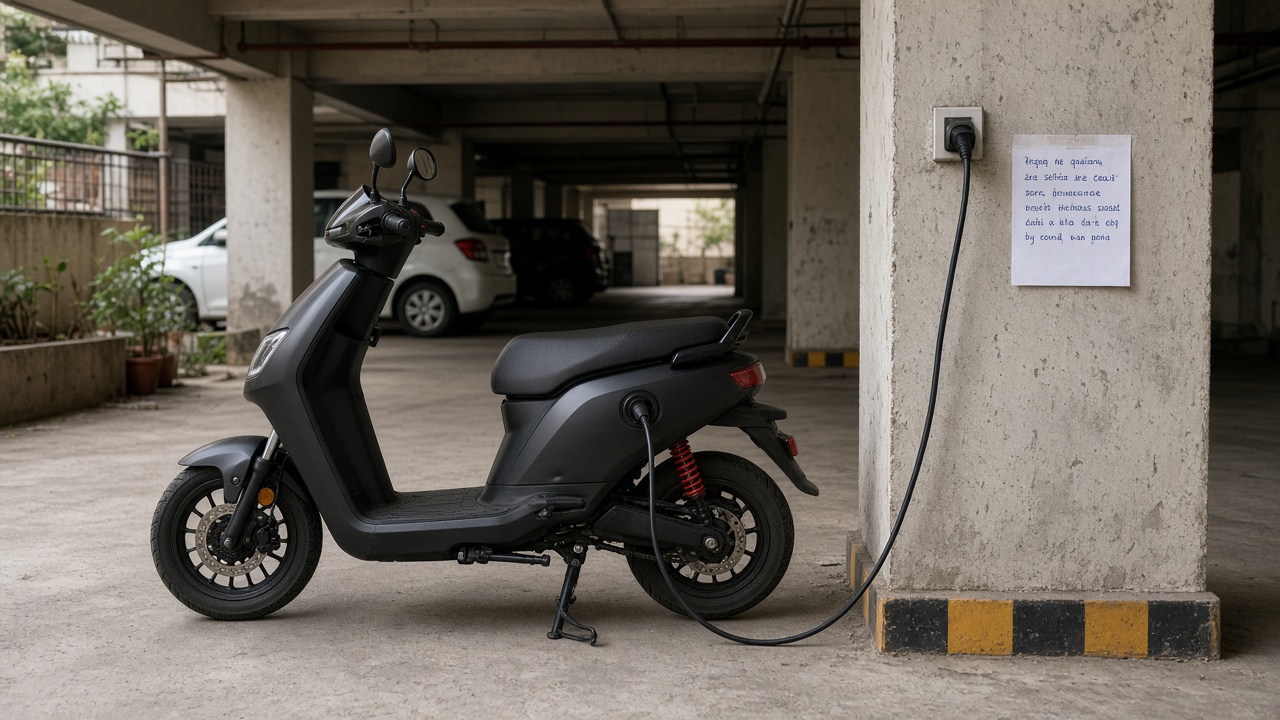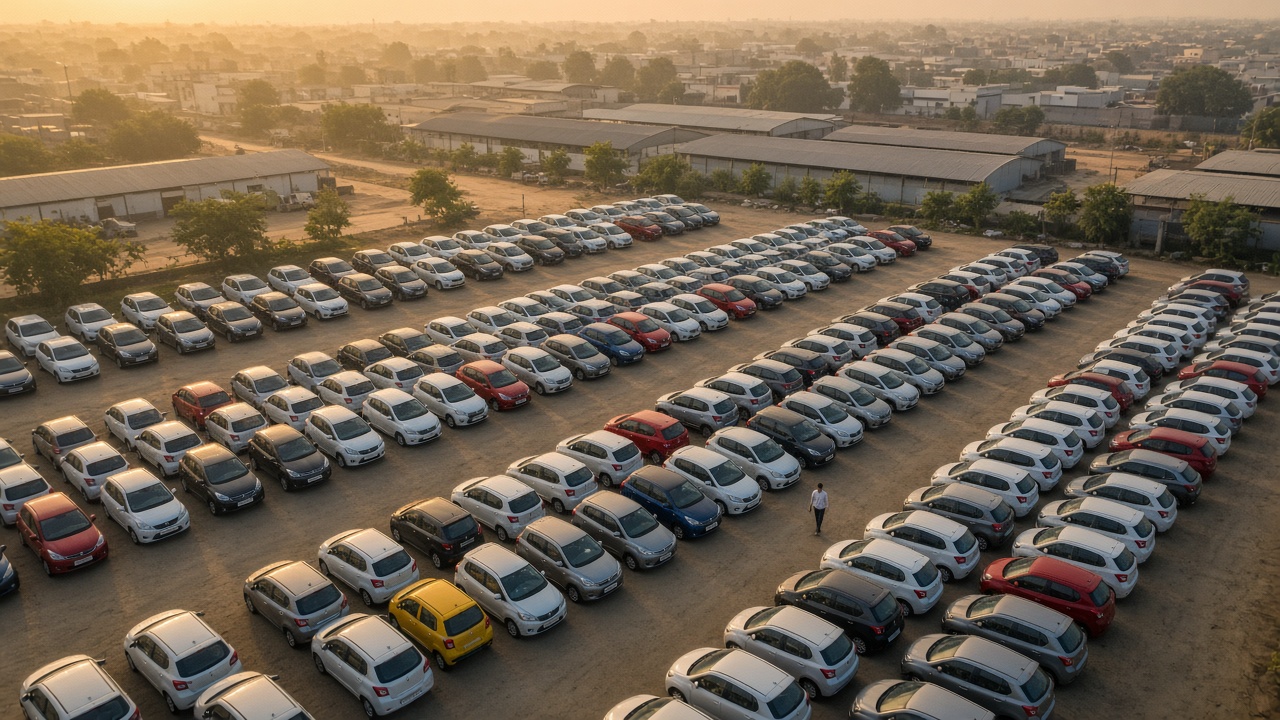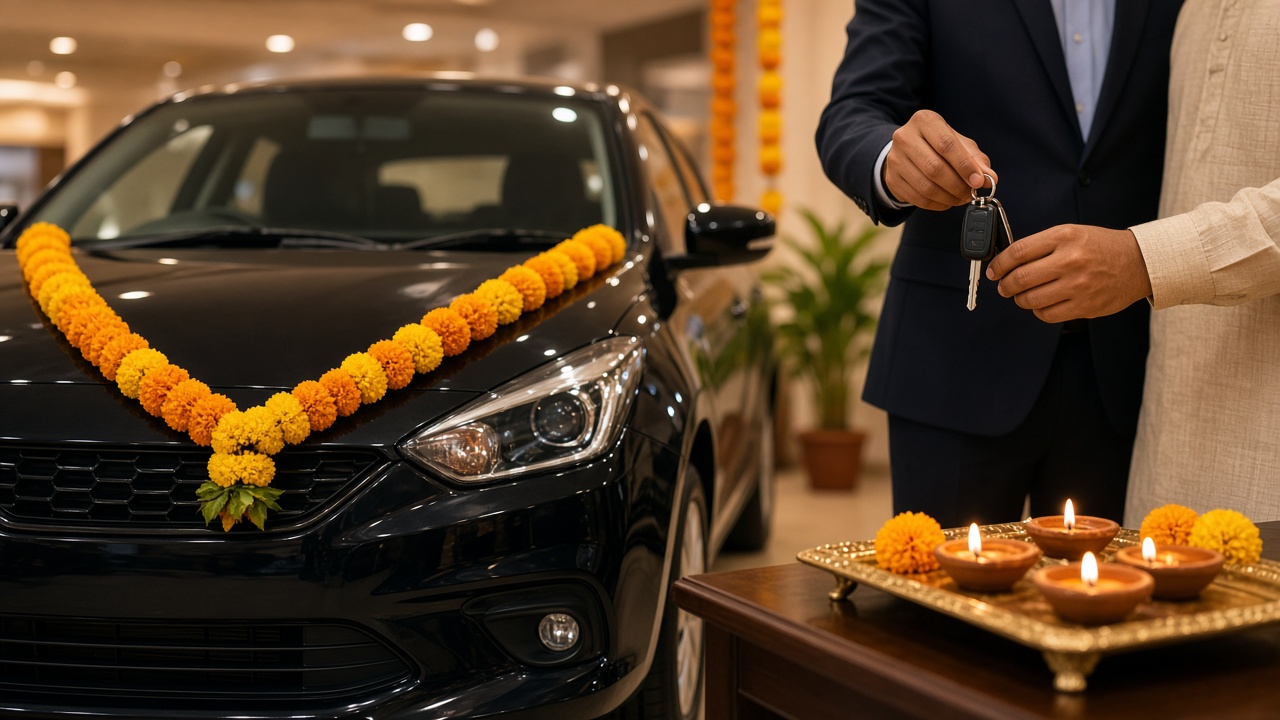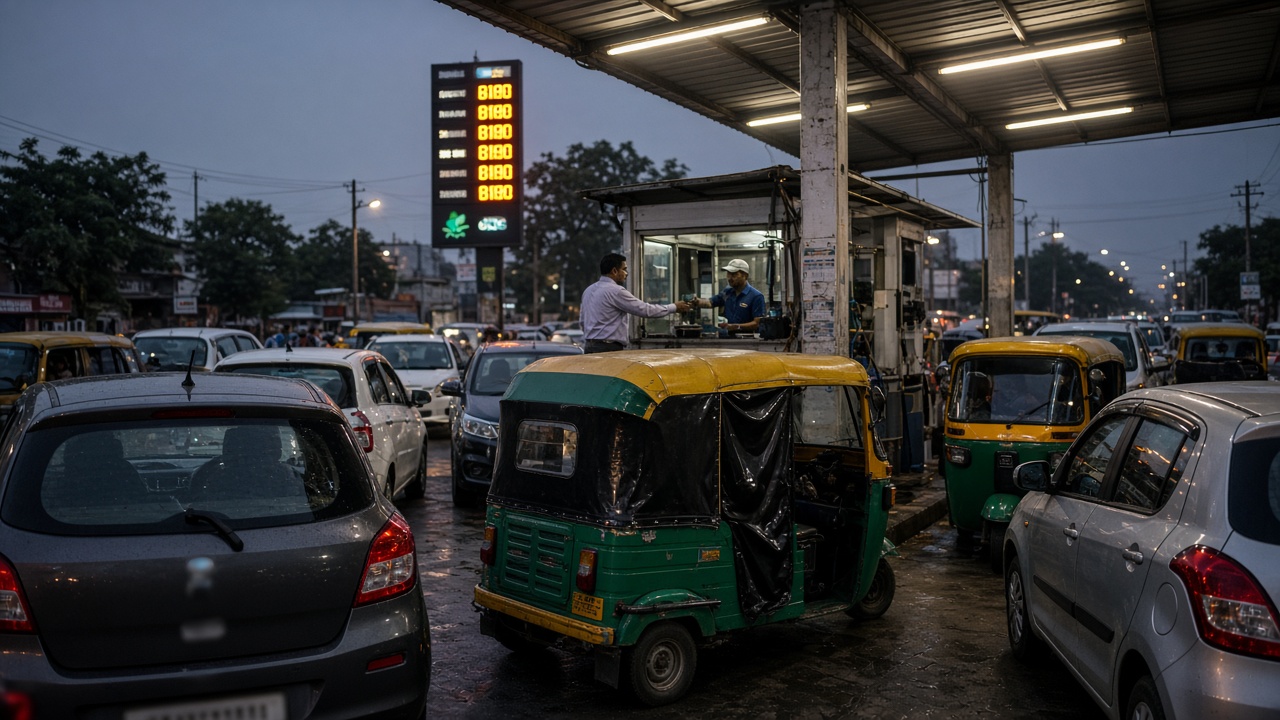
Petrol is still the single biggest fuel in Indian car showrooms. It just does not win by much any more. In September, FADA counted 41.27 percent of passenger vehicle registrations as petrol or ethanol blends, and 41 percent as CNG, hybrid or electric put together. A year earlier petrol was at 47.18 percent. In April this year it was 45.95.
FADA's CEO Saharsh Damani put it neatly when he spoke to ETAuto: petrol is losing share, not buyers. In July, he said, petrol registrations still grew by about 4 percent, but the whole market grew 19 percent, CNG 38 percent and EVs more than 80. So nobody is abandoning petrol. The new buyers are just going somewhere else.
His explanation for where they are going is plain. The shift reflects running costs after May's fuel price increase. As of 15 October petrol is ₹102.12 a litre in Delhi, ₹111.21 in Mumbai and ₹116.15 in Hyderabad, according to Mint, and the rates have been steady since June. Brent crude was around $106 a barrel on the same day, up more than 70 percent this year because of the US-Iran conflict. Once petrol crosses ₹100, people who never did arithmetic before start doing it, usually on the back of a petrol receipt.
CNG is the quiet winner, and it is getting pricier
The biggest of the alternatives is not electric, it is CNG, at 23.11 percent of September registrations. That is down from 25.28 percent in August, but still above the 22.02 percent of a year ago. Cartoq's explanation of the appeal is sensible: factory-fitted CNG now exists on hatchbacks, sedans, MPVs and SUVs, rather than only on cheap city cars and fleet models, and the newer twin-cylinder layouts have reduced the old boot-space penalty.
The catch is that the fuel itself has been getting dearer. Mahanagar Gas raised CNG in Mumbai by Re 1 from 1 October, to ₹89 a kg. That comes a month after a ₹2 increase to ₹88, and it was ₹86 back in May. MGL blames higher gas input costs from the West Asia crisis. Mint reported CNG getting dearer in eight locations on 14 October, with Chennai, Mathura and Meerut seeing the biggest rise, ₹2. The running-cost advantage over petrol is still there, but it is thinner than it was in the spring.
I would still say CNG makes sense for someone who drives a lot and lives near a decent pump. If you cover only a few hundred kilometres a month, the saving will not repay the compromise on boot space and the queue at the station. It does help that the Tata Punch, which Bharat NCAP tested in CNG form, earned five stars. A small, affordable car running on a gas cylinder getting full marks would have sounded unlikely a few years ago.
Hybrids, and a Duster that sold out before it launched
Hybrids reached 9.44 percent in September, up from 7.30 a year ago. They cost more up front than a regular petrol car, but they do not need a plug, which suits anyone living in a flat where the society will not allow a charger. I suspect that describes a lot of urban India.
The best example of the appetite is the Renault Duster. In March, Renault said it had sold out its entire planned 2026 production of the hybrid before even announcing a price, with about 39 percent of metro pre-bookings choosing it. Renault has now opened bookings at ₹21,000 for the Duster strong hybrid E-Tech 160, which has a 1.8-litre petrol engine, two electric motors and a 1.4 kWh battery making 160 PS. The official debut is on 17 October, and Renault quotes an ARAI-certified 29 km/l.
That is a big number and, like every ARAI number, it is the number you get on the test cycle and not in Bengaluru at 6 pm. I would expect noticeably less in real traffic. Even so, it is pitched explicitly at people looking for an alternative to diesel, and that tells you where Renault thinks the customer is coming from.
There is a small irony here. When the Duster was unveiled, Renault's engineering chief said a CNG version would be considered only if demand justified it, because some people see CNG as against the sporty nature of the car. CNG is nearly a quarter of the market. Image matters, I suppose, but it matters less than the monthly fuel bill.
And the old reliable
Diesel hardly moved. It was 17.74 percent in September against 17.76 percent a year earlier, so the people who need torque and highway range have not gone anywhere. Damani also made the point that practically every CNG car and petrol hybrid runs on the same E20 petrol, and these are the categories gaining share, while diesel, the one fuel without ethanol, has not gained. The ETAuto piece reads the ethanol debate as having contributed little to the shift.
FADA itself calls the August crossover, when alternatives briefly beat petrol, an inflection and not a decisive flip. I agree. The mix will keep swinging month to month depending on stock, launches and the price at the pump. My advice is to ignore the market's sums and do your own: kilometres a month, where you park, where you can charge, and what you plan to pay for the car. The market has already done its sums. They are not necessarily yours.